Top Five Healthy Habits for Family Phone Use
Placing boundaries on screen time is a difficult task for most adults. So, when it comes time for your kids to receive their first phone, it can be intimidating to imagine how their young minds might react to the social media apps, notifications and clickbait that are so hard for us grownups to ignore.
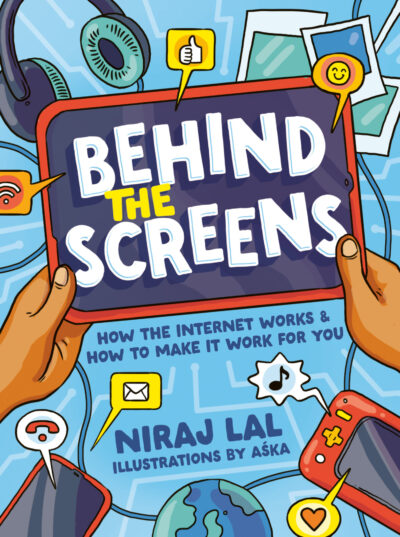
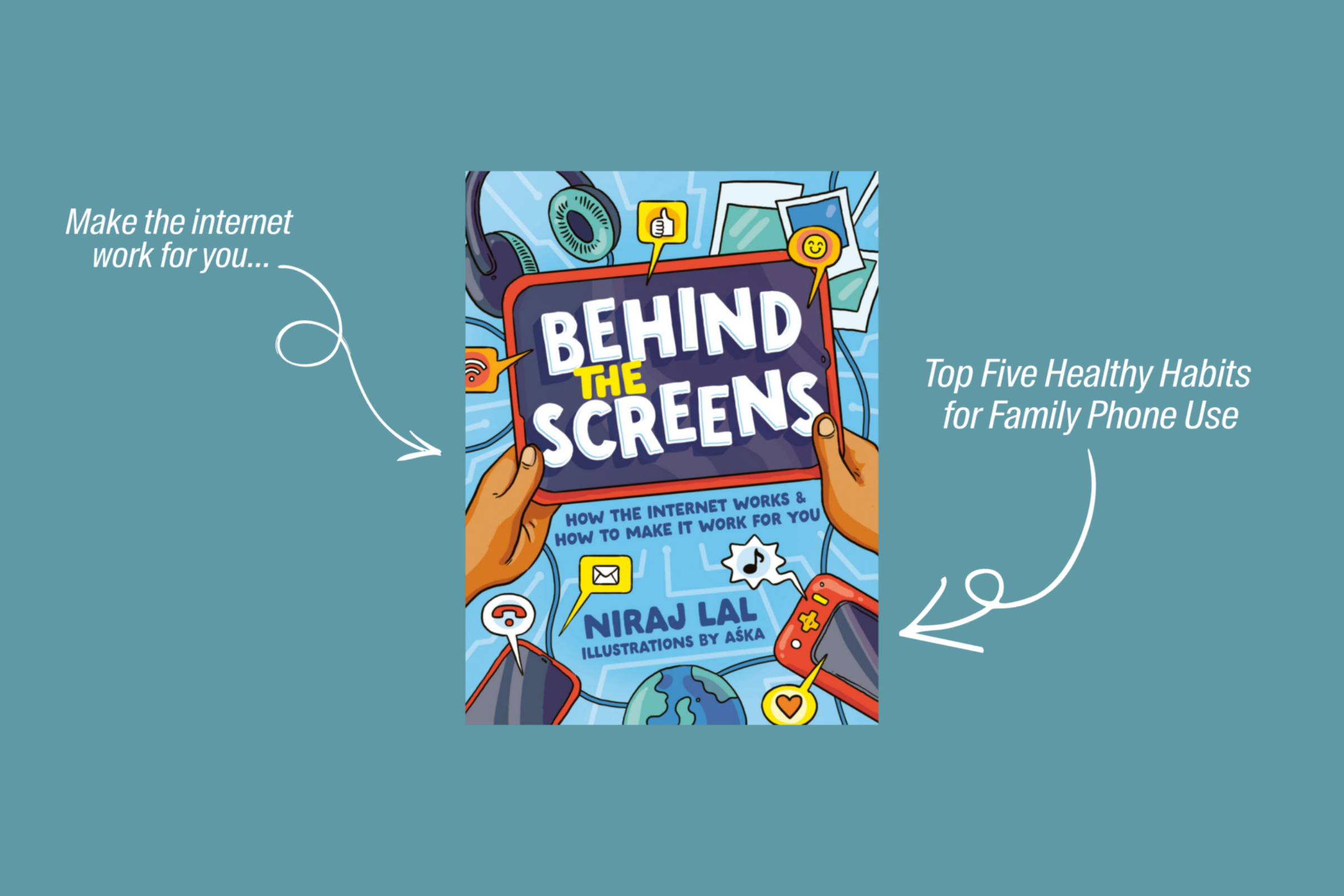
After reading Behind the Screens by Niraj Lal and Aśka, here are our top five takeaways for healthy family phone use.
1. Set a family screen agreement.
Giving your kids their first phone is a great opportunity to set boundaries as a family. That way, your kids can start their relationship with their smartphone with positive habits, and you can re-evaluate your own habits to set a good example for them.
When designing a family agreement, topics of discussion can include:
- screentime limits
- app choices
- location-tracking
- notifications
After you have discussed each topic and agreed on limits as a family, write them down. Stick them somewhere visible, and remember: if you don’t follow the agreement, you can’t expect your children to
2. Set your phone to night mode.
Many of us unwind with a scrolling session after a long day of work, school or study. But even after we put down our phones, our brains are still whirring with stimulation.
This is because normal phone brightness settings emit something called blue light, which keeps our brain alert. That means when we’re scrolling in bed with the brightness up, we’re firing up our neurons rather than preparing them for rest.
Adjusting your screen from day to night mode reduces the amount of blue light emitted, and substitutes it with orange/red light, which is less stimulating and will give your brain a better chance of a restful night’s sleep
3. Understand that addiction is part of the design.
There’s a reason why we scroll for hours and time disappears into the ether. The companies that engineer phones and social media apps want to keep you online. In order to do that, they use bite-sized stimulants like notifications and bright imagery to trigger dopamine releases.
When you find yourself falling down the infinite doomscroll, the technology is performing exactly as designed. It’s not your fault. But it is something to be conscious of, especially when considering giving your children their first phone
4. Educate your kids (and yourself) about the algorithm.
You probably know a bit about something called the algorithm. It’s the mysterious, unseen force that dictates the content you see online. If you Google one recipe for easy weeknight meals, you might find your Instagram reels have then switched to nothing but aesthetic videos of home cooks and their three-ingredient dinners. That is the algorithm doing its job.
Like notifications, the algorithm’s goal is to keep you engaged and on your phone for as long as possible. Educating your kids about the algorithm from day one will help them to understand how their wider digital activity affects the content they see online. It might even help them to influence the algorithm to work in their favour (more cat videos, less dark stuff).
5. Be open to adjusting your approach.
There’s no perfect way to approach screentime. Some people think a total ban is the only way to stop their kids from being exposed to the darker side of the internet. Others believe that screens are an inescapable part of the present and future, and encourage device use early so their kids aren’t left behind.
There’s no wrong approach, and every family is different. That being said, knowledge is definitely power. Giving yourself and your children the knowledge to understand how software, social media, smartphones and artificial intelligence work can only help in the long run. How you engage with the new digital frontier is up to you and your family to decide.
Blog post written by Danielle Frost